




Herniated Disc
A disc whose soft center pushes through its outer ring, causing back or neck pain and nerve symptoms.
A herniated disc happens when the soft center of a spinal disc pushes through a tear in its tough outer layer. It can cause back or neck pain and, if it presses on a nerve, pain, numbness or weakness in an arm or leg. Dr. Patel treats most herniated discs without surgery, starting with active care and adding targeted injections or a minimally invasive procedure when needed.
- Where it isBack & spine
- Treatment options05
- Who you seeAnup H. Patel, D.O.
- First visitExam and imaging review
Herniated Disc
Between each pair of vertebrae sits a disc. Each disc has a soft, gel-like center, called the nucleus, inside a tough, fibrous outer ring, called the annulus. Discs cushion the spine and let it bend and twist. With age, genetics or injury, the outer ring can weaken and tear.
When the center pushes out through that tear, it is called a herniated disc. People also say slipped or ruptured disc. A bulging disc is related but usually broader and milder. Most herniations happen in the lower back. They can also occur in the neck and, less often, the mid back.
A herniation can hurt in two ways. The disc itself can be painful. Disc material can also press on or chemically irritate a nearby nerve root, sending pain, tingling, numbness or weakness into a leg or arm. Many herniations seen on MRI cause no symptoms at all, so the exam matters as much as the scan.
Many herniated discs improve over weeks to months, and the herniated material often shrinks with time. Dr. Patel’s role is to manage pain so you can stay active while that happens, to watch for signs of nerve damage, and to offer epidural injections, nerve root blocks or a percutaneous discectomy when conservative care is not enough.
What it feels like · Why it happens
Mention these at your first visit. It saves time and helps focus the exam.
- Gradual, age-related wear that makes discs drier and less flexible
- Lifting heavy objects with the back instead of the legs, especially while twisting
- A sudden injury, such as a fall or car accident
- Genetics, which influence how quickly discs wear
- Repetitive bending, lifting or vibration at work
- Excess body weight, which adds load to the lower discs
- Smoking, which reduces the disc’s supply of nutrients
 Where Dr. Patel looks
How Dr. Patel finds the source
Treatment only works when it is aimed at the right thing. This is how the source is confirmed.
- Step 01
A history of your pain pattern and what triggers it
- Step 02
A neurological exam of strength, reflexes and sensation in the arms or legs
- Step 03
Nerve tension tests, such as the straight-leg raise
- Step 04
MRI, the best test for seeing discs and nerve roots
- Step 05
CT when MRI is not possible
- Step 06
EMG and nerve conduction studies to check whether a nerve is affected and how much
- Step 07
A selective nerve root block to confirm which level is causing symptoms
Your path to relief
Care moves one step at a time, from the least invasive option up, and only as far as you need.
First-line care
- Short-term activity changes while staying as active as pain allows
- Physical therapy for core stability, posture and safe movement
- Anti-inflammatory medications or muscle relaxants for limited periods, when appropriate
- Heat or ice to ease pain and spasm
- Avoiding heavy lifting and twisting during a flare
- A gradual return to normal activity and exercise
Back to function
As a rehabilitation physician, Dr. Patel pairs every treatment with a plan to rebuild strength, movement and daily activity, so relief lasts.
Physical medicine & rehabilitation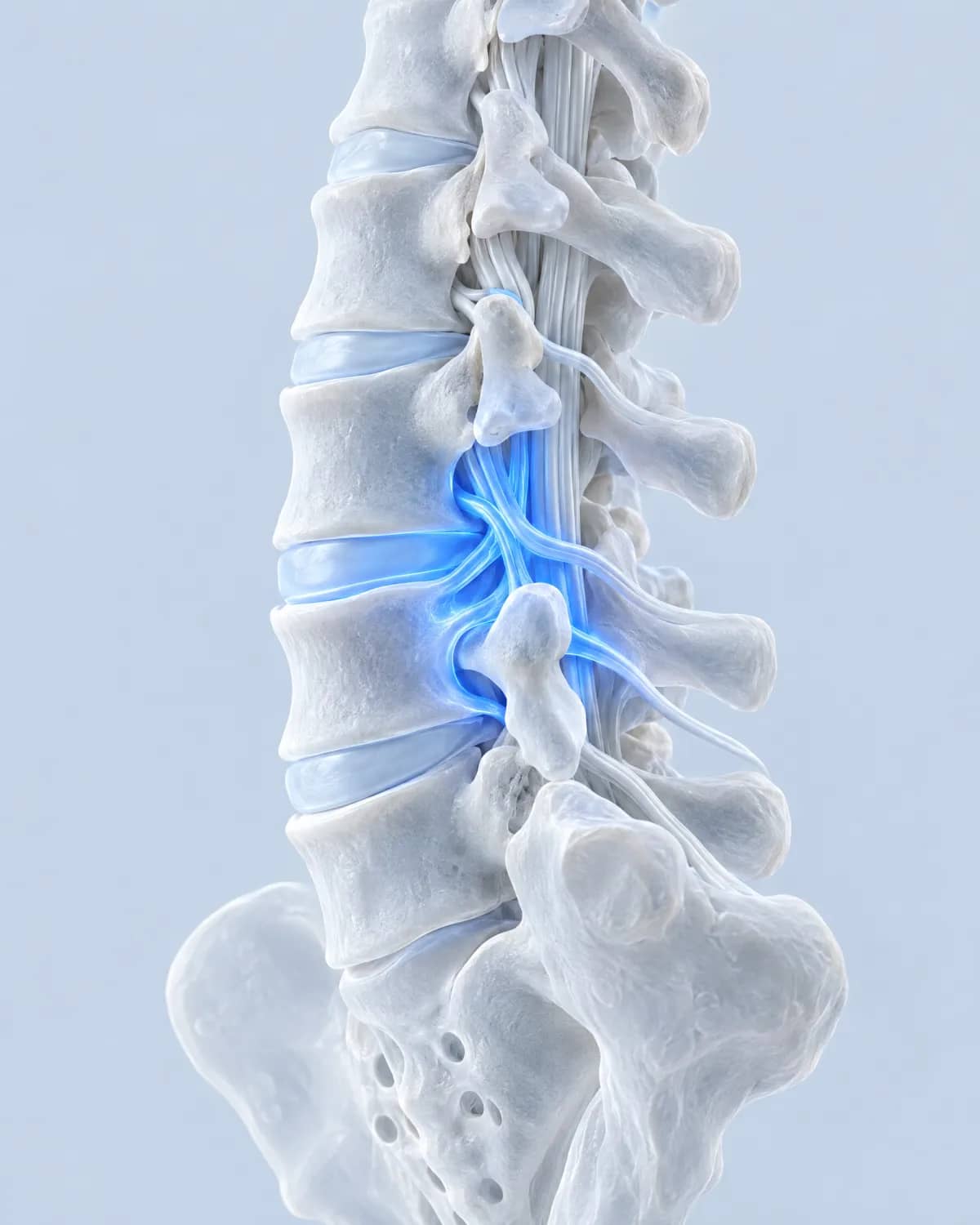
Epidural Steroid Injections
A steroid injection near irritated spinal nerves to calm pain that travels into the arm or leg.

Selective Nerve Root Block
A precise injection at one spinal nerve root to find and treat the source of arm or leg pain.

Percutaneous Discectomy
A needle-based procedure that removes a small amount of disc material to ease pressure on a nerve.
When to call
When to see a specialist
- Arm or leg pain that has not improved after a few weeks
- Numbness, tingling or weakness in an arm or leg
- Pain that limits sitting, sleeping or working
- An MRI report that mentions a herniation and leaves you unsure what it means
- Symptoms that started after a fall or car accident
- Pain that returns after an earlier episode
Go to the emergency room if
- Loss of bladder or bowel control
- Numbness in the groin, inner thighs or buttocks (the saddle area)
- Rapidly worsening weakness in an arm or leg
- Weakness in both legs
- Clumsy hands or trouble walking with a neck disc, which can mean pressure on the spinal cord
Questions
Is a bulging disc the same as a herniated disc?
Will my herniated disc heal on its own?
My MRI shows a herniation. Is that the cause of my pain?
What is a percutaneous discectomy?
Can exercise make a herniated disc worse?
This page explains a condition or treatment in general. It is not a diagnosis or medical advice for you. Dr. Patel will explain what applies to you at your visit.

Back & spine

Back Pain
Aching, stiff or sharp pain in the back, from strained muscles to disc, joint and nerve problems.

Sciatica
Pain that runs from the lower back or buttock down the leg, caused by an irritated nerve root.

Spinal Stenosis
Narrowing inside the spine that squeezes nerves, often causing leg pain when standing or walking.