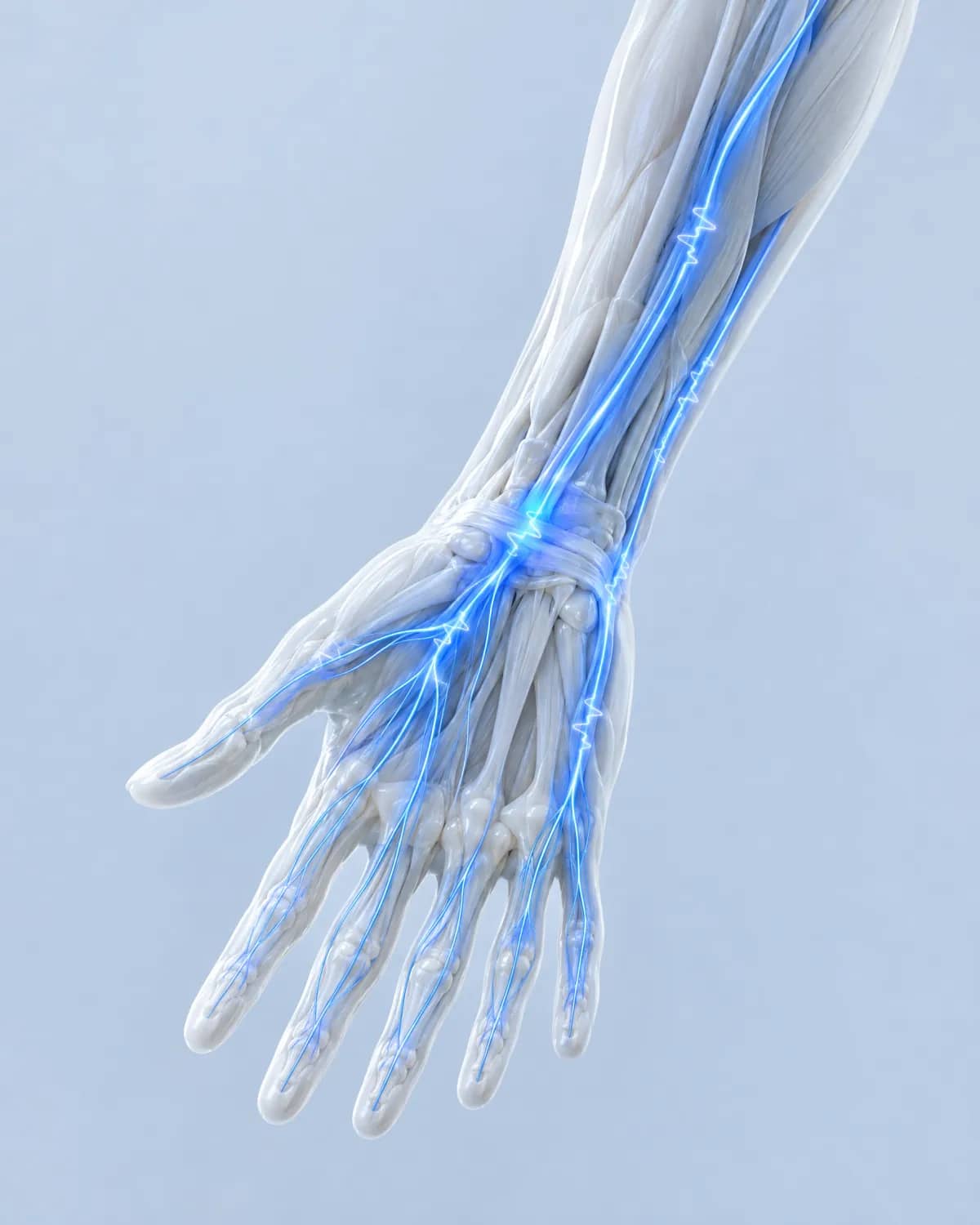

 Illustration · Where it works
Medial Branch Blocks
A short-acting test that numbs the nerves to the spine’s facet joints to see if they cause your pain.
A medial branch block is a diagnostic test that numbs the small medial branch nerves that carry pain from the facet joints of the spine. If your usual pain clearly drops for the few hours the medicine lasts, the facet joints are likely the source. Dr. Patel uses this test to decide whether radiofrequency ablation is likely to help.
- TypeDiagnostic
- GuidanceLive X-ray (fluoroscopy), often with contrast dye
- Also calledMBB, Facet nerve block, Diagnostic medial branch block
Is it right for you?
A consultation with Dr. Patel confirms whether this treatment is the right fit.
How it works
The facet joints are small paired joints at the back of the spine that guide movement between the vertebrae. Each joint gets its nerve supply from two tiny nerves called medial branches. When a facet joint is inflamed, damaged or injured, these nerves carry the pain signal. That can cause neck, mid back or low back pain, sometimes spreading into the shoulders, buttocks or upper thighs.
A medial branch block places a small amount of numbing medicine on these nerves, just outside the joint. It does not go into the joint itself. Usually several levels are numbed, because each joint has two nerves and pain often comes from more than one joint. Medial branch blocks can be done in the neck (cervical), mid back (thoracic) or low back (lumbar).
The block is mainly a test. The numbing medicine lasts a few hours. If your usual pain drops clearly during that time, the facet joints are very likely the source. To make the answer reliable, a second block on a separate day is often done. A small dose of steroid is sometimes added, but relief from the block is expected to be temporary.
Clear relief from the blocks points toward radiofrequency ablation, which treats the same nerves with heat for relief that often lasts many months. If the blocks do not help, the facet joints are less likely to be the cause. Dr. Patel may then test a different level or look for another source. Either way, you avoid a longer treatment that would not have worked.
Your appointment, step by step
The injections usually take only a few minutes, plus check-in and a short rest afterward.
Before the test
Dr. Patel reviews your history and imaging. You rate your usual pain and note which movements bring it on. Arriving with your typical pain makes the result easier to read.
Positioning and numbing
You lie face down for back levels, or face down or on your side for the neck. The skin is cleaned and numbed. Heavy sedation is avoided because it can blur the test result.
Placing the needles
Under live X-ray, Dr. Patel guides thin needles to the spots where the medial branch nerves cross the bone. Contrast dye may be used to confirm placement and rule out flow into a blood vessel.
Numbing the nerves
A small amount of numbing medicine is placed at each target. The needles are removed and small bandages are applied.
Testing your pain
Over the next several hours, you try the movements that usually hurt and record your pain at set times in a pain diary.
After the procedure · Honest risks
- Do the activities that usually cause pain in the hours after the block, so the test gives a clear answer.
- Fill in the pain diary at the times you are given and bring it back to Dr. Patel.
- The numbing wears off within hours and your usual pain is expected to return. This is normal.
- Plan for someone to drive you home, and avoid driving for the rest of the day.
- Avoid baths, hot tubs and swimming for up to two days, as instructed.
- Mild soreness at the needle sites may last a day or two. Most people resume normal activities right away or the next day.
- Soreness at the needle sites
- A temporary increase in pain for a day or two
- Brief dizziness or unsteadiness after blocks in the neck
- Bleeding, infection or allergic reaction, which are rare
- A misleading result, either relief not caused by the block or no relief even when the facets are involved, which is why two blocks are often used
- Rarely, nerve irritation
Questions
Why does the pain come back after a few hours?
Why do I need two blocks?
How much relief counts as a positive result?
Is a medial branch block the same as a facet joint injection?
Can I take my pain medicine before the block?
This page explains a condition or treatment in general. It is not a diagnosis or medical advice for you. Dr. Patel will explain what applies to you at your visit.